
- The Quiet Battle Over How Chicago Bars Take Your Money - July 22, 2026
- When Medford Seniors Need a Helping Hand at Home - June 10, 2026
- A Pre-Renovation Checklist for Old Homes - February 7, 2024
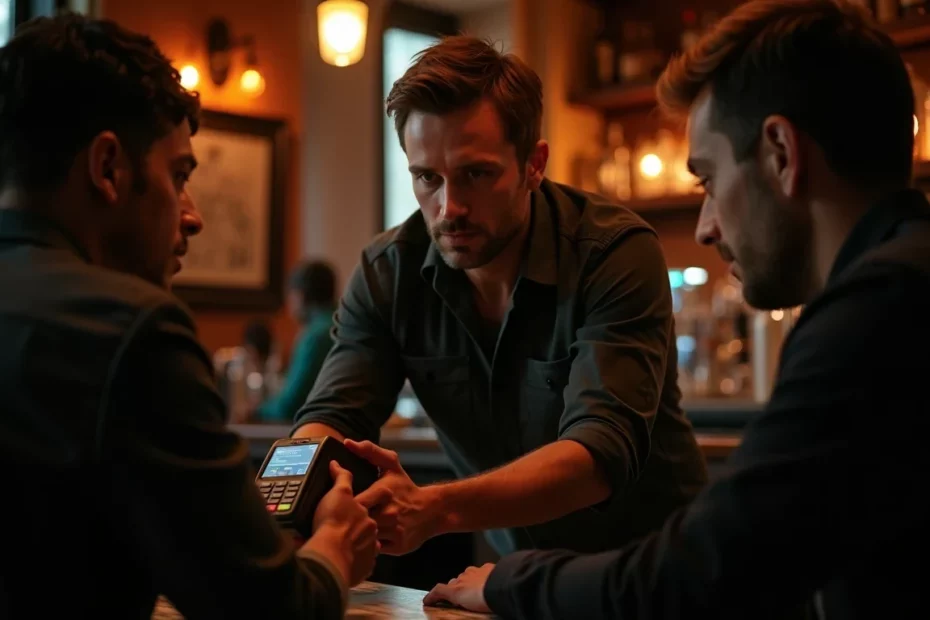
At the bar in Ukrainian Village, the check lands with a tiny sting that has nothing to do with the bourbon. The tab is $18, the card reader takes a cut, and by the time the money reaches the place that poured the drink, a piece has already been claimed by a payment system most customers never think about.
Chicago nightlife runs on those invisible rails. Visa and Mastercard are so baked into the routine that most people only notice them when a square reader freezes up at the wrong hour. For the independent bars and restaurants that keep the city interesting after dark, every swipe carries a cost, and those costs add up fast enough to matter.
The fee hiding in the martini glass
A bar with a full room on Division or a packed dining room in Logan Square can look healthy from the sidewalk and still bleed margin on the back end. Processing fees on card sales commonly run from about 1.5% to 3.5% once interchange, assessment charges, and processor markup are all in the mix. On a $75 tab, a 2.5% fee removes $1.88 before rent, labor, liquor, and taxes even enter the picture.
That sounds minor until you multiply it by the pace of a Friday night. One hundred tabs of that size in a day means roughly $188 gone. Over a year, the tab can reach well past $68,000. For a small place with a thin cushion, that is not background noise. That is staff hours, repairs, local produce, a better sound system, or a few more weeks before the landlord gets fresh leverage.
Other costs are more annoying because they hide in the fine print. Monthly statement fees. PCI compliance fees. Terminal rental. Chargebacks when somebody disputes a drink bought at 1:40 a.m. after a Cubs game or a last stop near the Blue Line. The card networks are expensive even when they are invisible.
Chicago bars are not waiting politely
Some places have already answered with the oldest payment strategy in the city: cash only. Rainbo Club in Ukrainian Village has long leaned into that rule, and The Empty Bottle has had cash-only moments tied to specific events or parts of the venue. That policy is blunt, but it works. No swipe means no network fee.
Other operators are less absolute and more tactical. Illinois has allowed cash discounting and card surcharging since 2017, so a growing number of venues are making the price difference visible instead of eating it quietly. The customer paying with cash gets the lower number. The customer using a card pays a little more. Nobody has to pretend the processor is doing this out of civic virtue.
That approach fits certain rooms better than others. A high-volume neighborhood bar where the average ticket is small and the turnover is relentless feels the squeeze more than a white-tablecloth spot. In places like Pilsen, Andersonville, or the busier corners of the West Loop, operators are looking hard at what they can shave without making the room feel cheap or punitive.
The global fight is the local fight
Chicago’s barroom math is part of a much larger argument about who controls the pipes that money runs through.
Visa and Mastercard have become the default infrastructure for international commerce. They sit in the middle of many transactions that used to feel purely local. That dominance looked even more pointed after both companies halted operations in Russia in 2022. Then came fresh anxiety in 2025, when sanctions reportedly touched a Canadian judge and reminded plenty of people that payment systems can be turned into pressure points.
Europe has started building around that reality. Wero, a homegrown digital payments platform, already has tens of millions of users and is meant to lower costs while reducing dependence on American card rails. Brussels is also pushing work on a digital euro and euro-backed stablecoins, which says plenty about the mood there. The goal is a parallel financial lane.
Canada is moving in the same direction with Real-Time Rail, a system designed for instant bank-to-bank transfers without Visa or Mastercard in the middle. The pitch is straightforward: faster settlement, lower fees, more control.
Chicago bars are not building sovereign payment networks, but they are living with the same frustration. Every venue that switches a customer from card to cash, or experiments with direct bank transfers, is making a tiny local version of the same argument. Keep more of the money where the drink was poured.
What changes when the room pays differently
The upside is easy to see. Lower processing costs mean more room for wages, better ingredients, a second round of repairs, or a clearer shot at surviving the winter slowdown. Faster bank settlement would help too. Card money can take a day or three to land. Instant transfers would keep cash flow from getting pinned to a processor’s timetable.
The tradeoff is equally plain. Card rewards are a powerful habit in a city where people love to feel they are getting something back. Cash is less convenient. New apps add friction. More cash on hand means more attention to security, safes, and the unglamorous routine of getting the night’s take off the premises without attracting the wrong kind of interest.
Customers also notice when a place changes its rules midstream. If the cash discount is clear, people adapt. If the fee appears only at the register, irritation follows. Chicago diners and drinkers tolerate a lot, but they do not like surprise arithmetic.
The city feels the difference
What kind of nightlife survives when every transaction is shaved by systems that sit far away from the block? A city like Chicago depends on independent rooms that can take a risk on a weird booking, a late kitchen, a strong martini list, or a jazz set that runs past midnight. Those places are not built like chain operations. They live on margin, mood, and repeat custom.
If payment infrastructure keeps inching toward cheaper, faster, more local options, the winners will be the bars that stay open after the train riders have thinned out, the restaurants that can afford to keep a neighborhood chef, the rooms that still feel like Chicago instead of a spreadsheet with stools.
The battle is quiet because it happens one tap, one tab, one fee at a time. The money still moves. The question is how much of it comes back to the room that earned it.